Hope Squads Provide Peer-to-Peer Mental Health Support
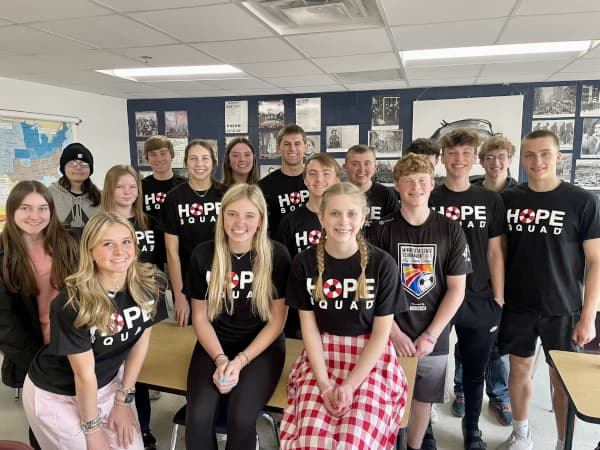
A student suicide impacts an entire community, leaving many to wonder what more could have been done? Districts across the country have implemented a program called Hope Squad. It is designed to implement a peer-to-peer connection. Many teens are more comfortable opening up to a friend than to an adult, so Hope Squad members become a bridge — not counselors, but connectors. Their role is to notice, listen and guide their peers toward the right help. The true impact comes from students having meaningful conversations.
Schools are receiving grants and donations to implement Hope Squads from Potterville School District in Michigan to Butte-Silver School District in Montana to Pine Island School District in Minnesota. In one of the schools, the student body nominated classmates they trusted and felt comfortable turning to. From the 200 nominations, a small diverse group was selected to create the Hope Squad.
Once selected, the focus shifted to practical training. After mental health theory, they learned exactly what to watch for and how to respond. They were trained to notice real warning signs, such as concerning social media posts, sudden behavior changes, or classmates who consistently sit alone at lunch. They are not expected to be a counselor, but instead are trained on when to refer a peer to a trusted adult.
As a result, the Hope Squad put the training into action. It could mean contacting a peer after a troubling social media post, inviting a student to sit with them at lunch or starting a private, meaningful conversation. These everyday actions are what make the program work. Hope Squads educate the entire student body to reduce stigma and change their school’s culture. It gives students the tools to have conversations that are meaningful and can change outcomes. It brings kindness and caring for all.
Hope Squads continue to be implemented in high schools across the nation. It is a way to acknowledge mental illness and be proactive. It takes away the stigma of mental illness and lets it be an open conversation. More information is available at hopesquad.com. That one connection could make the difference in someone’s life.
Lisa Myran-Schutte, CMAA, has been an athletic/activities director at several schools in Minnesota, including Houston High School and Pine Island High School. She is a member of the High School Today Publications Committee.
Related Stories